
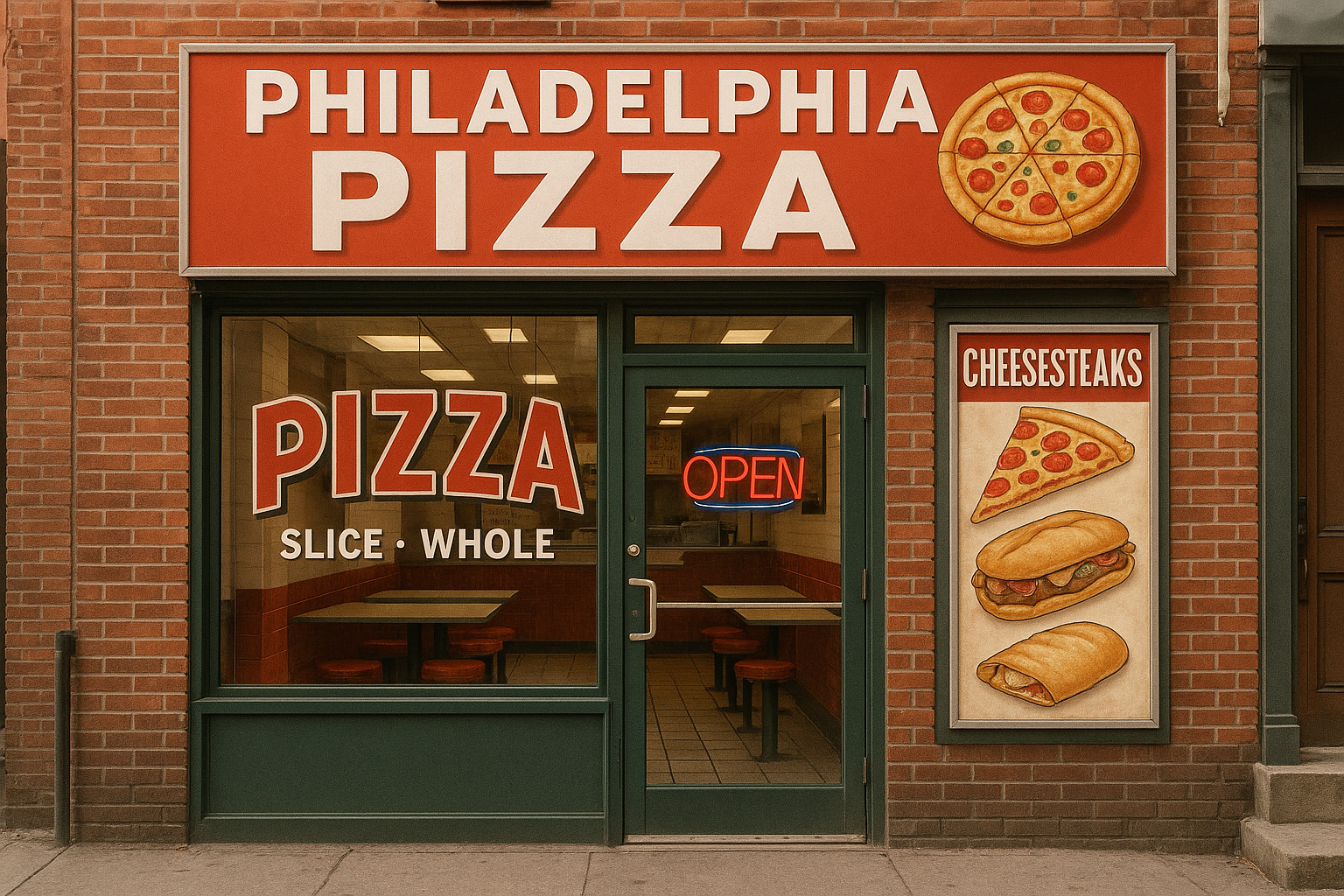
Your Slice of the Pie: How to Open a Pizza Shop in Greater Philadelphia
Opening a pizza shop in the Greater Philadelphia area is a dream for many, but navigating the legal and regulatory landscape can be a challenge. This guide breaks down the essential steps and requirements for both the City of Philadelphia and Montgomery County to help you get your doors open.
📍
Location, Zoning & Occupancy
- Confirm zoning for “Eating & Drinking Establishment”
- Get Zoning/Use Registration Permit from L&I
- Secure building permits for renovations
- Obtain Certificate of Occupancy
📋
Food Service License
- Complete Health Department Plan Review
- Apply for Food Preparation & Serving License
- Fees: $275 (under 30 seats) or $415 (30+ seats)
- 5 business day review period
🔬
Health & Safety
- Kitchen layout Plan Review required
- Regular health inspections
- Food Protection Manager Certification
- Ongoing compliance monitoring
💼
Business & Tax
- Register business entity (LLC/Corp)
- Get EIN from IRS
- Register for BIRT tax account
- PA Seller’s Permit for sales tax
⚠️
Additional Requirements
- Sign Permit for storefront signage
- Insurance (liability & workers’ comp)
- Liquor License if serving alcohol
- Trash/Recycling bins at entrance
Note: For municipalities like Upper Dublin, Fort Washington, and other areas in ZIP 19006
🏥
County Health License
- Submit Plan Review Packet 30 days before opening
- Includes floor plans, equipment specs, plumbing details
- Pass pre-opening inspection
- License must be posted visibly
🗺️
Local Zoning & Permits
- Check township-specific zoning ordinances
- Confirm “restaurant” use permitted
- Building, plumbing, fire inspections for construction
- Municipal permits may be required
📊
State & County Compliance
- Montgomery County OPH has jurisdiction
- PA Seller’s Permit required
- Certified Food Safety Manager (CFSM) required
- Plan review fee: ~$260
Your Pizza Shop Launch Checklist
Track your progress from concept to opening day
Foundation & Planning
Permits & Licensing
Business Operations
Disclaimer: This article is for informational purposes only. Regulations change, and you should always confirm requirements directly with the relevant city, county, and state agencies.